


 Analysis results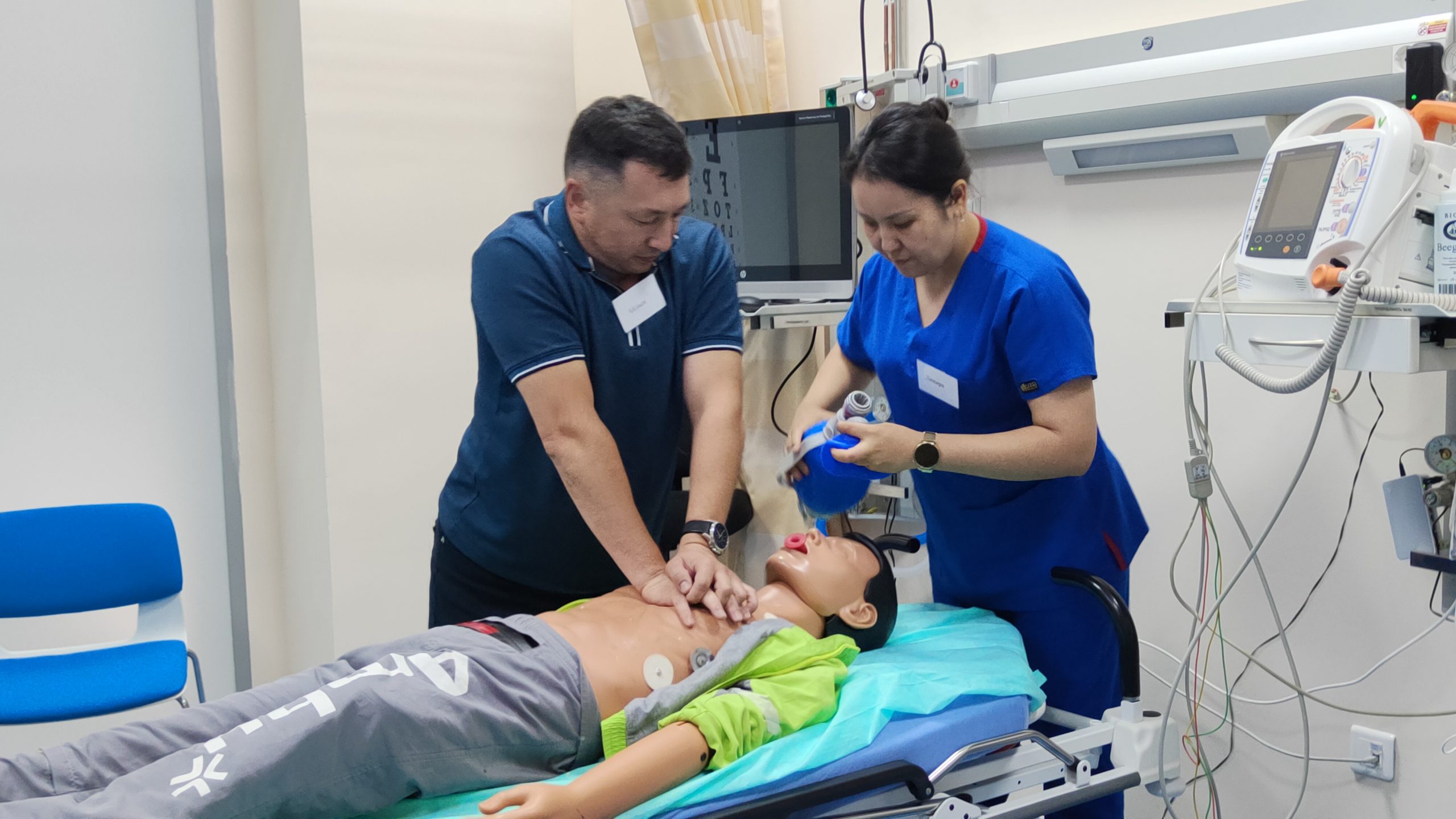
| Simulation Center
Simulation Center
 Regulatory Documentation
 Simulation courses
Simulation training at UMC
Simulation training in medicine is a modern tool for improving the clinical safety and quality of medical care. It allows medical professionals to practice algorithms, technical skills and team interaction in conditions that are as close as possible to realclinical situations, but without risk to patients.
Simulation is used to prepare for rare, complex, and critical conditions where the cost of error is particularly high: acute respiratory and cardiovascular disorders, massive blood loss, sepsis, pregnancy and childbirth complications, and perioperative crises. Special emphasis is placed on teamwork, clinical thinking, and time-constrained decision-making.
What does simulation training do for practice?
Simulation training at UMC is aimed not only at developing individual skills, but also at systematically improving medical care. It allows you to:
- reduce the risk of preventable medical errors.
- increase the readiness of teams for emergency and critical situations;
- practice clinical algorithms to the point of automatism.
- Develop communication and team interaction (CRM) skills.
- objectively assess the level of professional competencies.
Mission statement
The mission of UMC simulation training is to improve patient safety and quality of medical care by training medical teams to work in high-risk environments, introducing modern educational technologies and developing a culture of clinical responsibility.
We consider simulation as an integral part of the quality and safety management system in healthcare.
Vision
The vision of UMC is to become a national coordinating and methodological center for simulation medical education, forming uniform standards for training medical specialists and setting the direction for the development of simulation in the Republic of Kazakhstan.
Goal
Creation of the Republican Center for Simulation Education on the basis of the University Medical Center and the Nazarbayev University School of Medicine in accordance with the Decision of the Board of the Ministry of Health of the Republic of Kazakhstan dated May 15, 2024.
The Center is considered as an infrastructure platform for training personnel, implementing clinical safety standards and supporting priority areas of healthcare.
Infrastructure and resources
- University Medical Center (UMC)
Simulation rooms located in the Heart Center and the National Research Center for Motherhood and Childhood, equipped with state-of-the-art simulation equipment and integrated into the clinical environment. The training is conducted with the participation of experienced faculty and clinical staff.
- Nazarbayev University School of Medicine
Classrooms, computer equipment, objective Structured clinical examination (OCE) rooms, computer testing classrooms, lecture halls, and simulation equipment that provide a full cycle of training, assessment, and methodological support.
The role of simulation training in UMC
СимуляционноеThe UMC simulation training is aimed at medical practitioners, residents and medical teams and is part of a systematic approach to developing human resources and improving the safety of medical care in the country.

Registration for CT/MRI